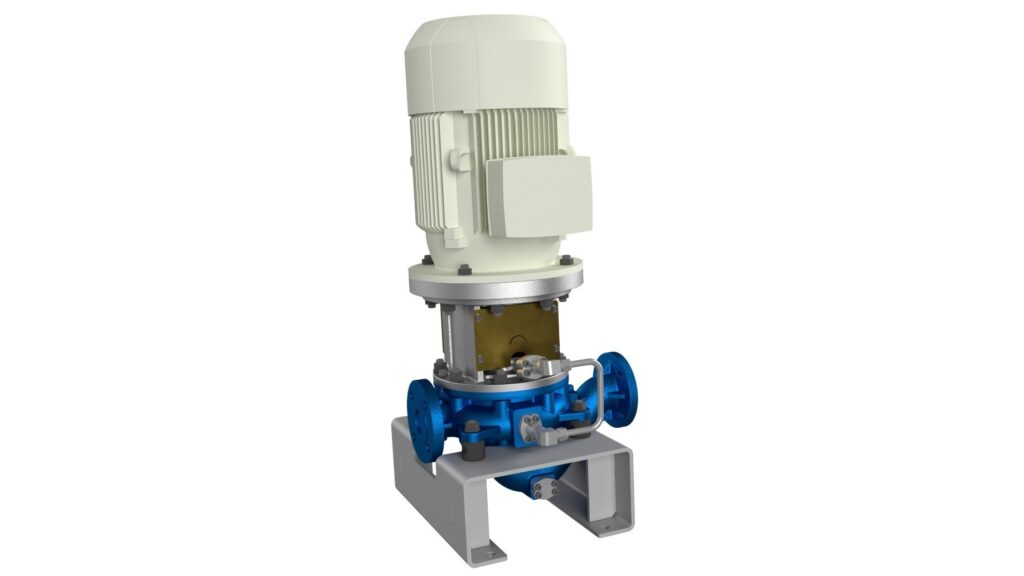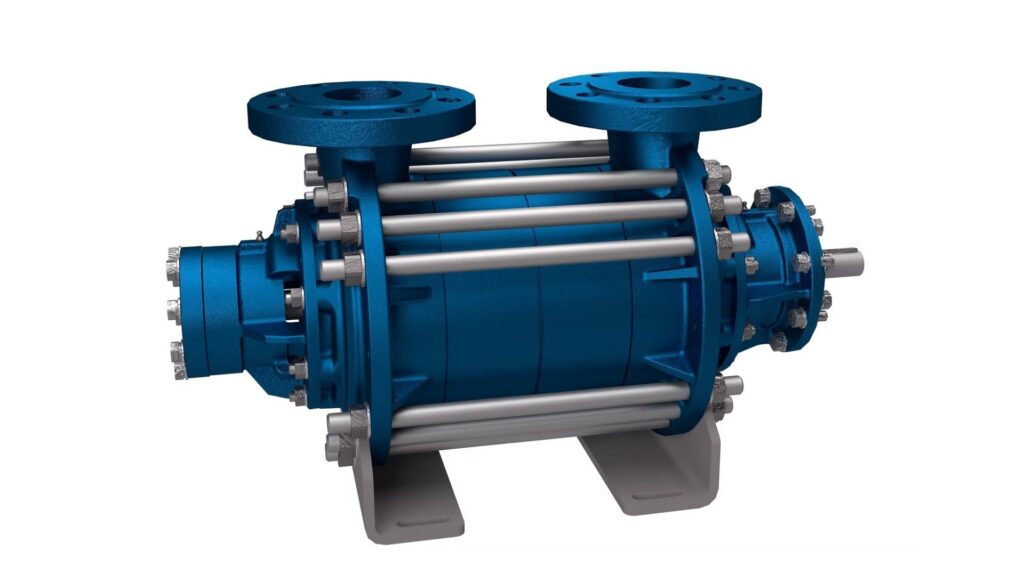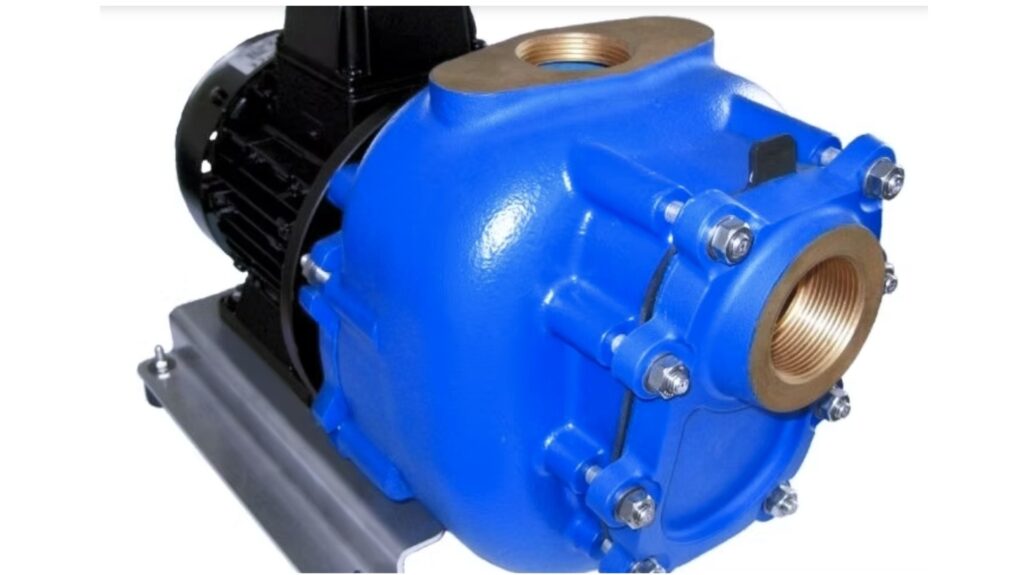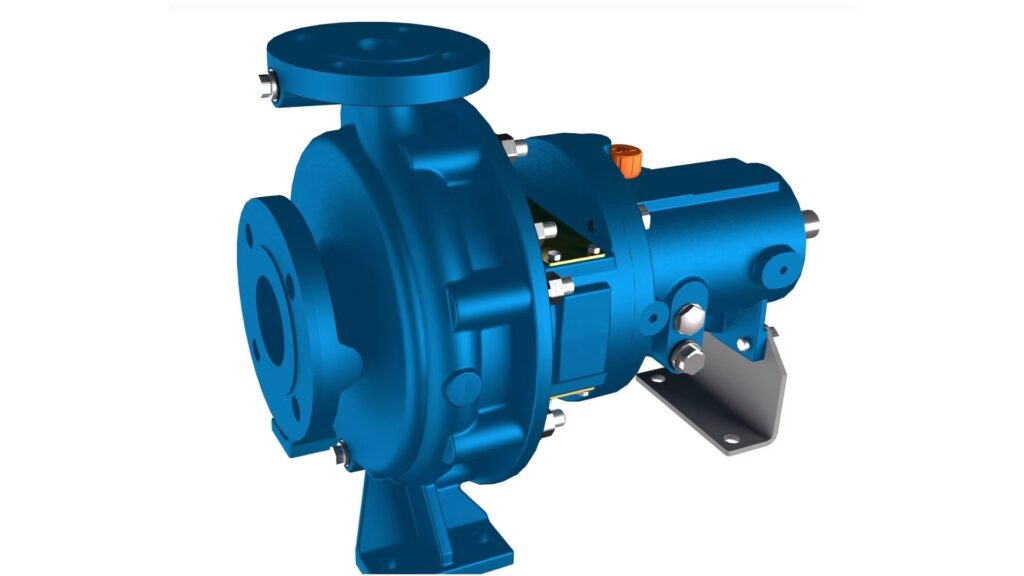
Rotary lobe pumps are rotary positive displacement pumps and represent a specialized form of lobe-type displacement pumps. They operate with two synchronously rotating lobes that transport the medium horizontally or vertically, depending on the orientation of the pump head. The pump head contains the rotors, while an integrated timing gearbox with its own lubrication ensures smooth and contact-free operation. The drive unit typically consists of a coupling and gear motor. Flow rate is influenced by rotor shape, pump size, speed, and motor power, and can be adjusted via speed control or bypass systems. The discharge pressure is determined by the system backpressure and the pump’s performance limits.
Typical performance values include flow rates from 0.5 to 100 m³/h, pressures up to 40 bar (higher on request), viscosities from 20 to 3,400,000 mPas, and media temperatures ranging from -60 °C to +450 °C. The pumps can operate with drive powers up to 200 kW, handle solids content up to 80% (depending on the medium), and particle sizes up to 50 mm. Maximum suction lift is around 6 m. Heating can be implemented via electricity, thermal oil, steam, or water.
Rotary lobe pumps are especially well suited for abrasive or highly viscous media, making them ideal for use in chemical processing, wastewater treatment, food production, and other demanding industries. Thanks to their rugged design, they can reliably handle high solids concentrations and cope with elevated system backpressures. They are self-priming and can be designed to run dry if required.
Sealing systems include gland packings, lip seals, and single or double mechanical seals. Magnetic couplings are not feasible due to the synchronously driven shafts. The pumps are available in a wide range of materials – from cast iron, stainless steel, and aluminum to special alloys such as Hastelloy, Duplex, titanium, and engineered plastics – to suit specific applications in terms of medium, temperature, and pressure.