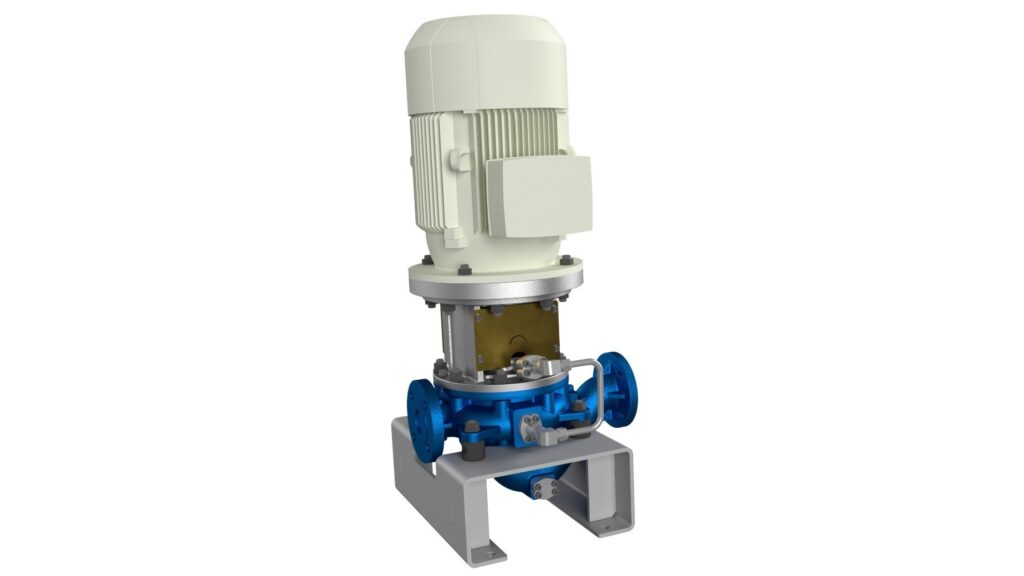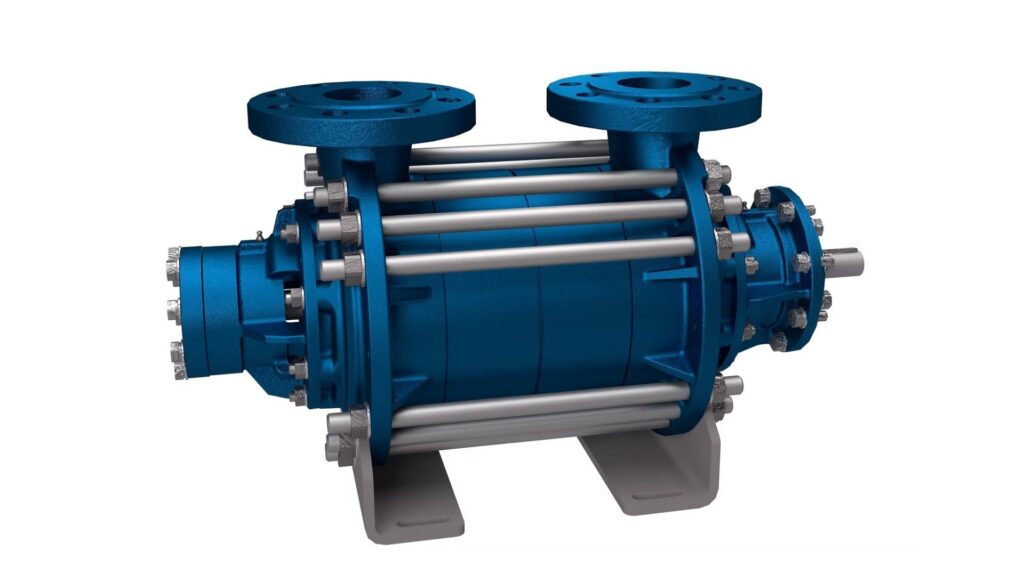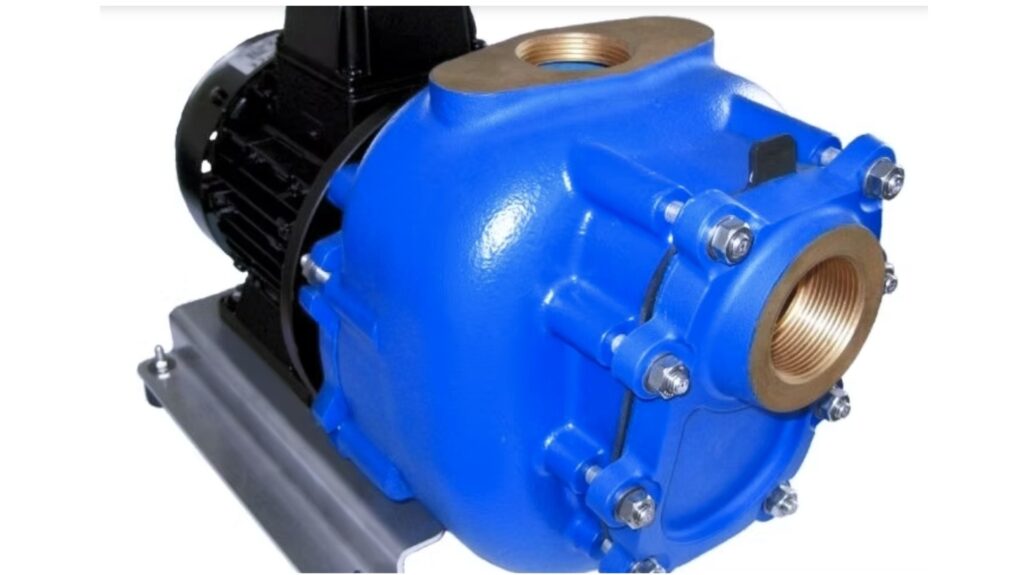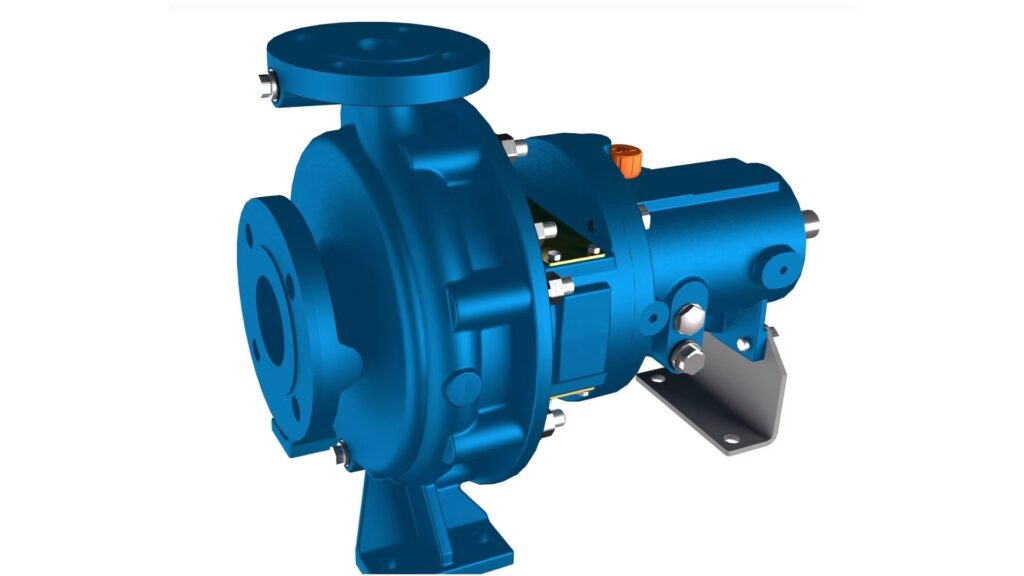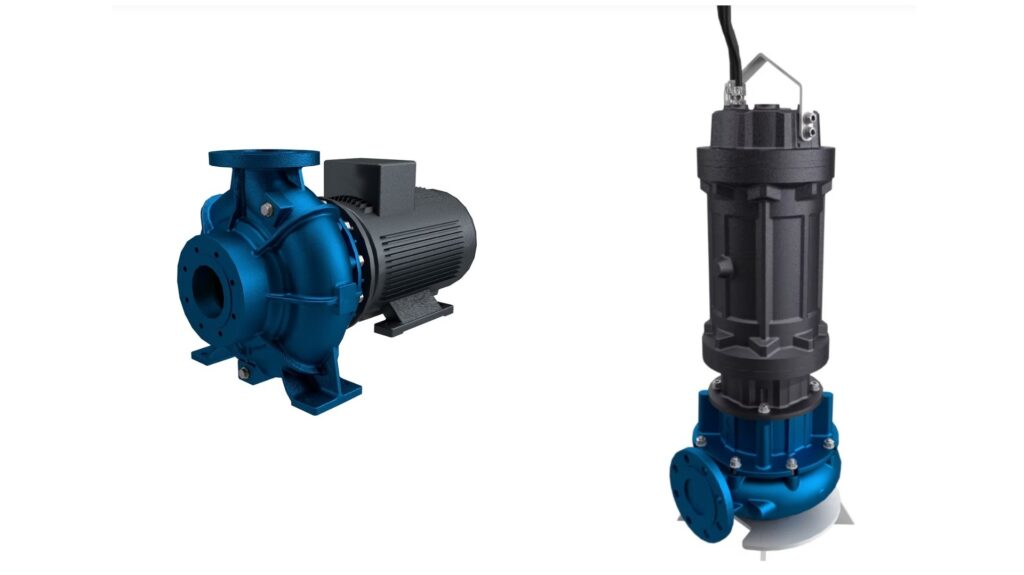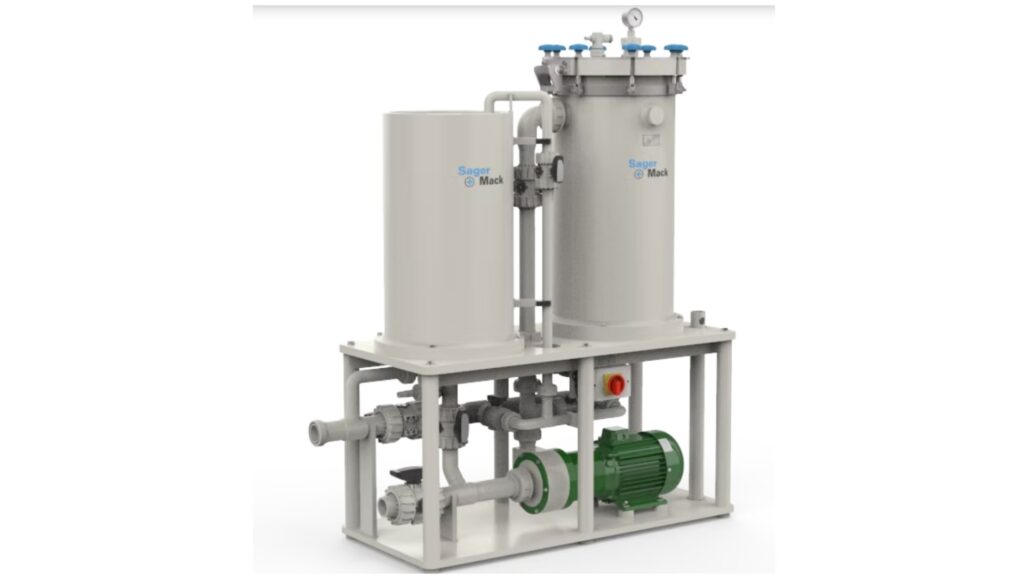
Gear pumps are positive displacement pumps, most commonly used in the external gear pump design. The pump head contains two counter-rotating gears, supported by bearings on both sides. The driving gear is connected to the drive shaft and powers the second gear. Depending on installation orientation, the gears convey the medium either horizontally or vertically. Lubrication is usually provided by the pumped medium itself. The drive is typically a gear motor with coupling, although direct-drive versions with magnetic coupling are also available.
Flow rate and performance depend on pump size, gear module, speed, and design. The flow can be regulated by speed control or bypass systems. The discharge pressure results from the system backpressure as well as internal leakage and the pump’s power limits.
Typical performance data: pressure up to 120 bar, flow rate from 0.01 to 300 m³/h, viscosity up to 150,000 mPas, temperature range from -60 to +450 °C, and drive power up to 200 kW. Gear pumps are especially suitable for clean, non-abrasive fluids with low or soft solid content. Maximum suction lift is about 6 m. Heating can be provided electrically, with steam, thermal oil, or water.
These pumps are self-priming and nearly pulsation-free, making them ideal for dosing applications. Even non-lubricating fluids can be reliably handled using special material combinations and external bearing arrangements.
Available sealing systems include gland packings, lip seals, single and double mechanical seals, and heated magnetic couplings. Materials include cast iron, stainless steel, Hastelloy, Duplex, titanium, tantalum, aluminum, plastics, and other special alloys – all selected based on the fluid and application.